A Case Study with Saudi Aramco
Course: BC2406 Analytics I — Grade A+
Developed a comprehensive predictive model to assist Saudi Aramco in reducing methane emissions, using statistical analysis and advanced modeling techniques to forecast emission levels and suggest actionable reduction steps.
Approach
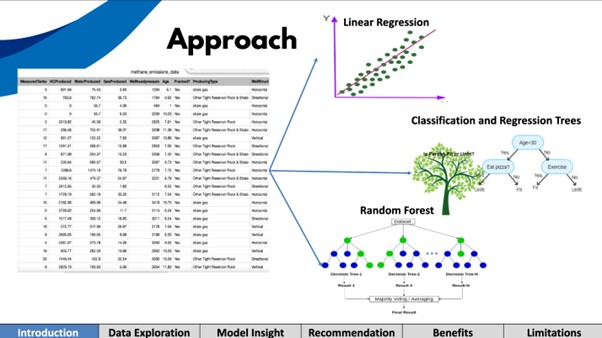
The raw methane emissions dataset was processed through three modeling techniques, each suited for different analytical purposes:
- Linear Regression — for predicting continuous emission values and understanding linear relationships between variables
- Classification and Regression Trees (CART) — for generating interpretable decision rules that identify key emission drivers
- Random Forest — an ensemble method aggregating multiple decision trees for improved prediction accuracy through majority voting and averaging
Three-Tiered Strategy
- Assessing Acceptability — benchmarking predicted emissions against industry standards to classify levels as acceptable or unacceptable
- Tackling Significant Variables — identifying key factors driving emissions, including number of wells, equipment leaks, measured tanks, and production volumes
- Scenario Testing — optimizing reduction strategies through simulations across different operational parameters
R Shiny Interactive Tool
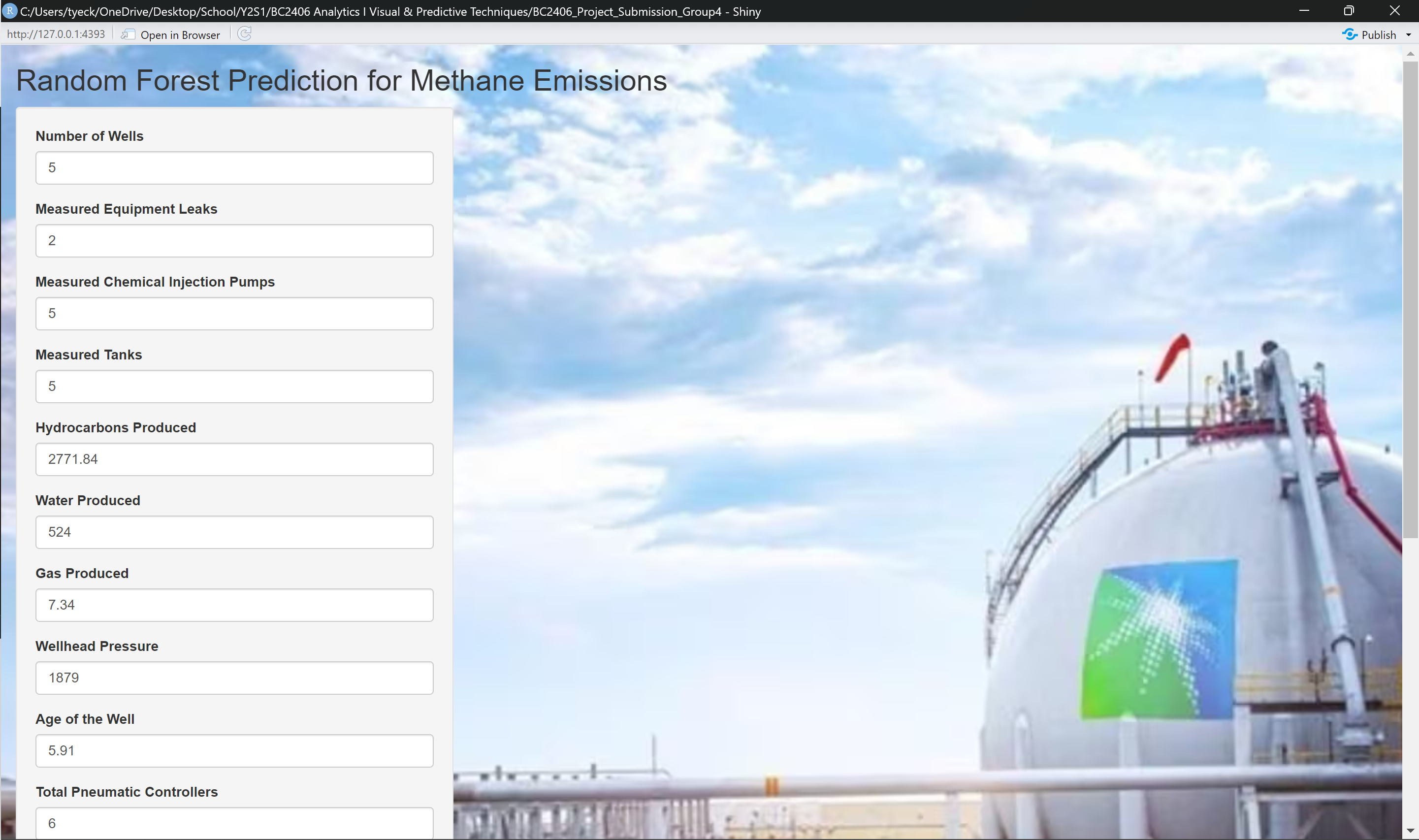
We built an interactive R Shiny web application that allows users to input well-specific parameters — such as number of wells, measured equipment leaks, chemical injection pumps, hydrocarbons/water/gas produced, wellhead pressure, well age, and producing type — and receive real-time emission predictions with acceptability classifications.
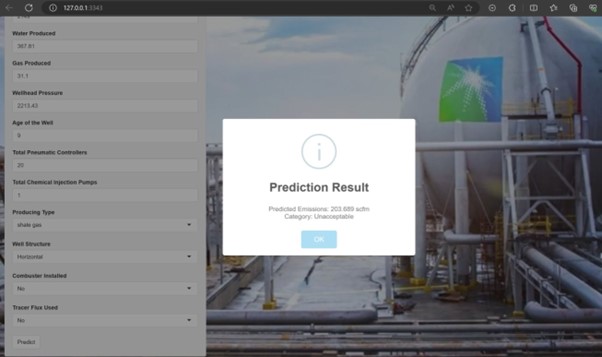
The tool outputs a Prediction Result showing the predicted emissions in scfm and its category (e.g., “Predicted Emissions: 203.689 scfm — Category: Unacceptable”), enabling operators to quickly assess whether a well’s emissions fall within acceptable thresholds.
This is an academic proof of concept and is not affiliated with Saudi Aramco.