Leveraging Machine Learning for Improved Delivery Efficiency
Course: BC2407 Analytics II — Grade A+
Developed machine learning models to tackle the critical problem of late deliveries in e-commerce, using a Kaggle dataset of 180,519 deliveries across 52 features. Our analysis revealed a late delivery rate of 54.94%, highlighting a significant operational challenge.
Approach
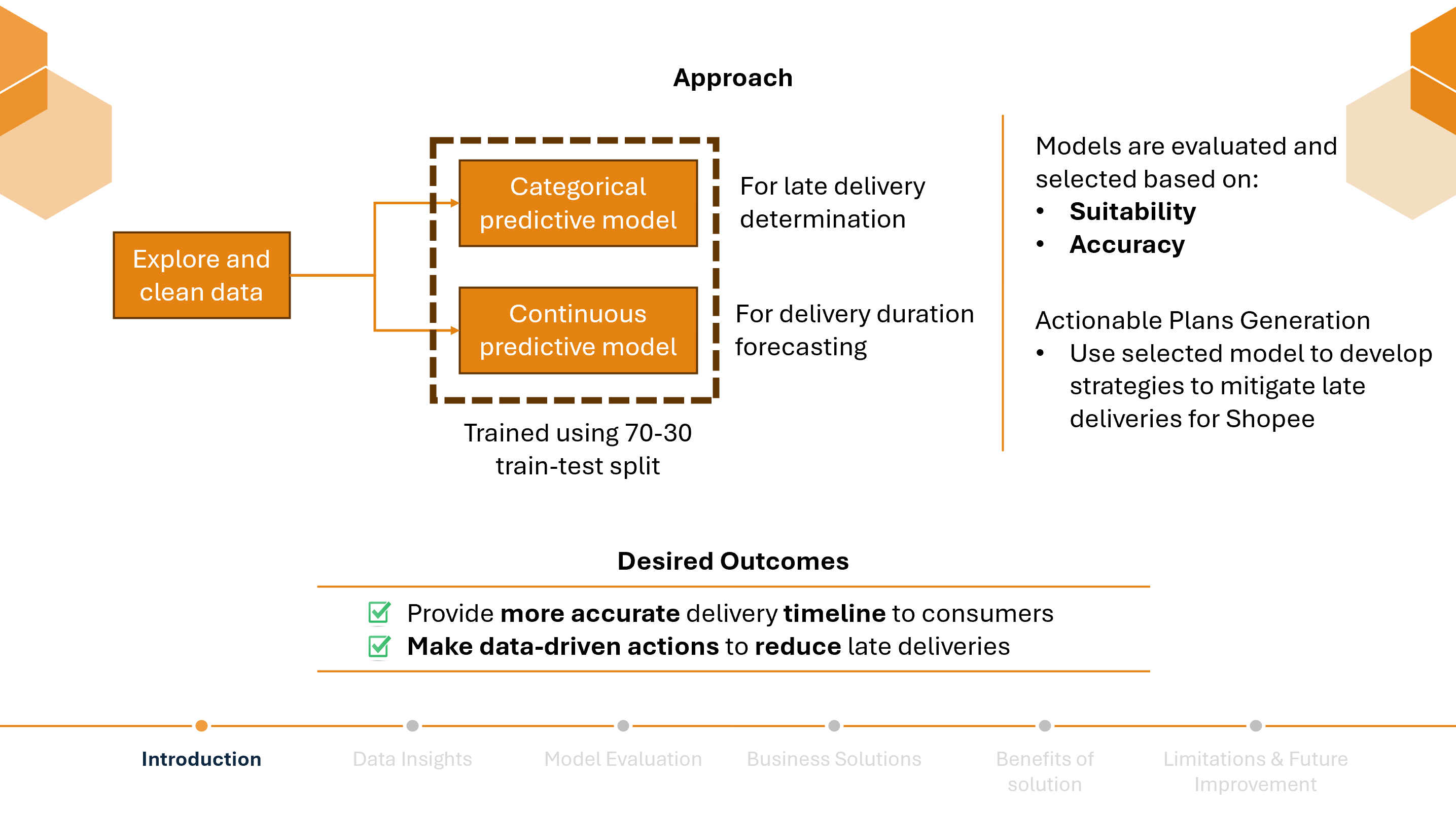
After exploring and cleaning the data, we built two types of predictive models using a 70-30 train-test split:
- Categorical predictive models — for determining whether a delivery would be late
- Continuous predictive models — for forecasting actual delivery duration
Models were evaluated and selected based on suitability and accuracy, with the goal of generating actionable strategies to mitigate late deliveries.
Delivery Insights Dashboard
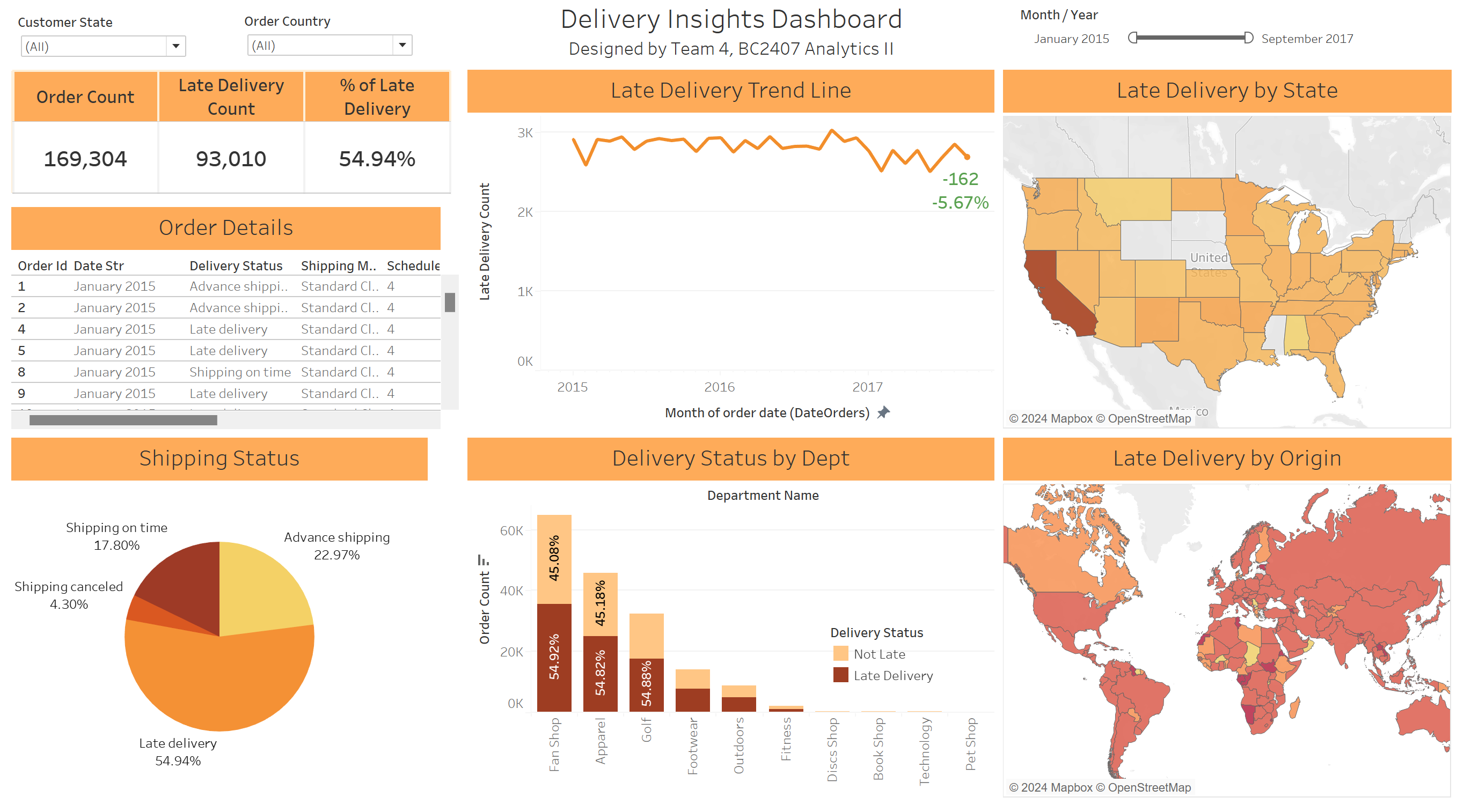
We built an interactive dashboard visualising key delivery metrics including late delivery trends over time, delivery status breakdowns by department, and geographic heatmaps showing late delivery rates by state and origin country. The dashboard surfaced insights such as:
- 54.94% of all orders were late deliveries
- 93,010 late deliveries out of 169,304 total orders
- Late delivery rates varied significantly across US states and product departments
Model Comparison & Results
We benchmarked four models against a no-model baseline (18.92% accuracy):
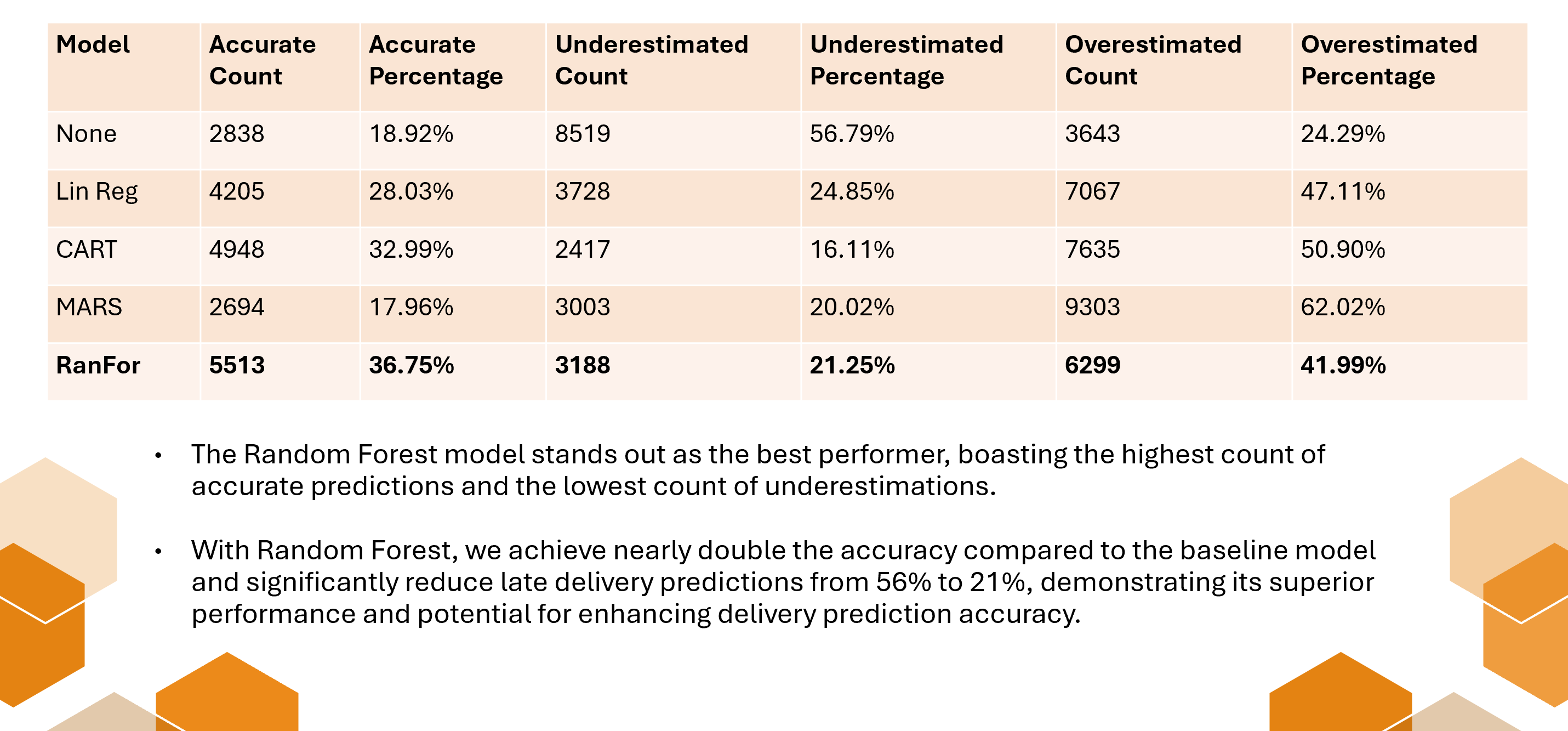
Random Forest emerged as the best performer, nearly doubling baseline accuracy and achieving the highest count of accurate predictions (5,513) with the lowest underestimation count. This demonstrated its superior potential for enhancing delivery prediction accuracy and significantly reducing late delivery predictions from 56% to 21%.
Business Applications
- Predicting Delivery Days — integrate into the e-commerce app to provide consumers with more accurate delivery timelines
- Predicting Late Orders — enable data-driven actions to proactively reduce late deliveries through real-time monitoring
This is an academic proof of concept and is not affiliated with Shopee.